
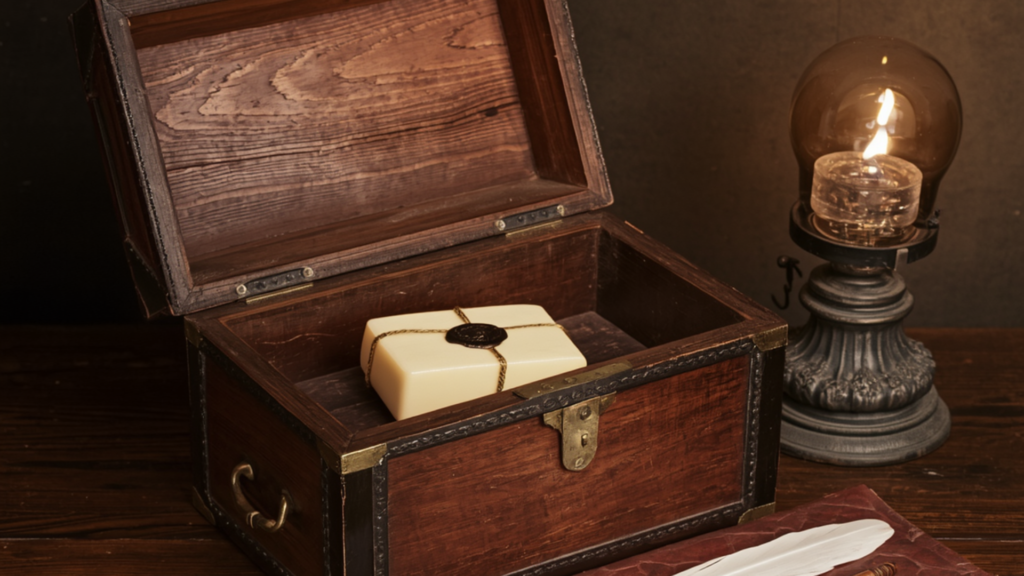
In 1712, Queen Anne introduced a soap tax in England.
It tripled the price of soap. Soap became a luxury good. The soapmakers’ equipment was locked away at night by tax inspectors. Every kettle sealed. Every batch measured and taxed before it was allowed to be sold.
The tax brought in revenue equivalent to roughly eight billion pounds in today’s money.
It was abolished in 1853. By William Ewart Gladstone. After 141 years.
Think about that. For 141 years — from Bach composing his cantatas to Karl Marx writing Das Kapital — soap, in Europe’s most industrialized nation, was defined as a luxury. Because the state needed revenue.
Hygiene became a marker of privilege. The rich bathed. The poor stank. It wasn’t moral weakness. It was tax policy.
This isn’t a moral story. It’s a fiscal one. We tend to believe that access to basic things — soap, water, bread — is a natural consequence of civilization. It isn’t. These are the results of political choices. They’re something someone has to decide.
When Gladstone abolished the tax in 1853, soap became democratic. Suddenly ordinary English people could wash themselves daily. The hygiene revolution in Britain — pasteurization, falling mortality, public health legislation — didn’t come first and foremost from science. It came from being able to buy soap without it costing a day’s wages.
Every time you take a bar of soap off a shelf without looking at the price, you’re standing on one side of a political choice that was made in 1853.
Sources og noter
- Wikipedia — Soap tax (England) — 1712-1853
- Historic UK — The Soap Tax — Dronning Anne, Gladstone
- William Ewart Gladstone — finansminister 1852-1855, afskaffede sæbeskatten som del af bredere skattereform
- Konvertering 8 mia. pund: indekseret skat-indtægt over 141 år justeret for inflation. Tal varierer, men er konsistent i mainstream-kilder.