
In Old Norse, Saturday was called laugardagr.
Laug means “bath” or “warm water.” Dagr means day. So Saturday literally means “bathing day.” It’s still visible in modern Icelandic: laugardagur. And in the Scandinavian languages — Danish lørdag, Swedish lördag, Norwegian lørdag — the same old word still sits in the calendar.
That word is still there in your week. You’ve just forgotten why.
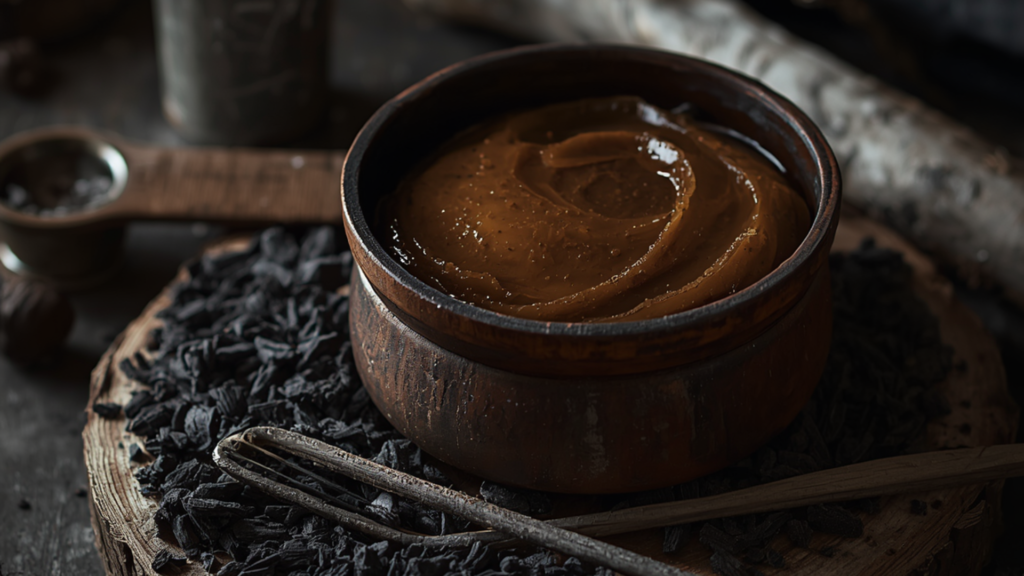
The Vikings bathed weekly. In a Europe where, by later accounts, people didn’t wash at all, that was extraordinary. They had soap — made from animal fat and wood ash.
When you burn wood, what’s left is ash rich in potassium carbonate. Pour water through it, and you get lye. Boil lye together with fat, and you get soap. It’s the oldest recipe the Nordic countries have for cleaning.
It was brown. It was soft. It was strong. It was all they had.
They didn’t use it only to wash themselves. They used it in hair and beard. Light hair was beautiful — and lye bleached keratin. The soap did two things at once: it cleansed, and it took the color up a notch. It’s the same mechanism the Gauls before them had used. Pliny mentioned it. The Vikings carried the tradition on.
Archaeologists have found combs, tweezers, ear picks, and razors in Viking graves. The National Museum of Denmark has collections full of it. This was not a people who didn’t care about appearance.
English chroniclers complained about the Danish Vikings. Not because they were violent — that was everyday life. They complained that the Vikings were “too clean.” That they seduced English wives with their combed, bathed, well-groomed state.
The Danish word for Saturday carries that history inside it.
Seven hundred years later, Borup Kemi still boils soap on the same principle. Lye plus fat. Just with plastic jugs now.
What has changed: that we have the choice. The Vikings had wood, fat, water. We have coconut palms, beef tallow, kaolin, and sodium citrate. We have a periodic table and a SAP value calculator.
They made soap out of what the land gave them. We choose.
Sources og noter
- Historienet — Vikingerne satte en ære i god hygiejne — laugardagr, ugentlig badning, sæbe i hår/skæg, blegning
- Wikipedia — Sæbe — træaske + animalsk fedt-historik
- Nationalmuseets vikingesamlinger — kamme, pincetter, ørerensere, barberknive
- Engelske krønikeskrivere klagede over danske vikingers hygiejne — Henrik af Huntingdon, Vita Edwardi Regis, m.fl.
- Borup Kemi grundlagt 1908. Bollerup Jensen 1935. Samme opskrift sælges stadig.