
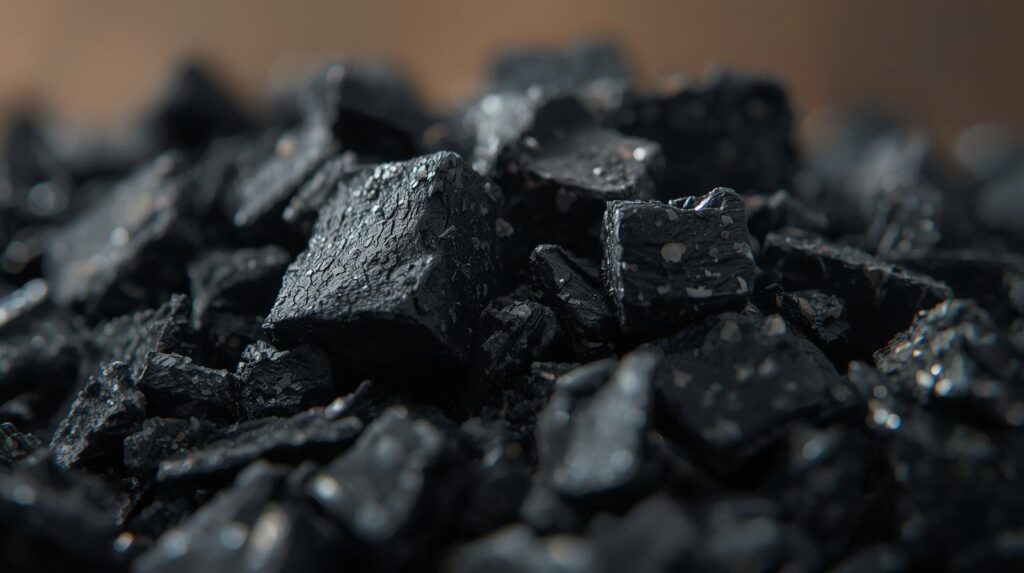
Activated charcoal isn’t new. It isn’t a trend. It isn’t something an influencer dreamed up on a Tuesday.
It’s been used for thousands of years. Not because it’s Instagram-friendly… because it works.
Take a piece of coconut, bamboo, or wood. Heat it without oxygen. It’s called pyrolysis, and it leaves behind a charcoal so porous that one gram has a surface area of several hundred square meters. One gram. Sit with that for a second.
That surface is the whole point.
Adsorption. Not absorption… adsorption. The difference: absorption is when a sponge soaks up water. Adsorption is when substances cling to a surface. The charcoal’s surface binds dirt, oil, and excess sebum. It clings. And then it’s rinsed away with the water.
The pores can breathe. Buildup in the scalp loosens. The smell of fish and garlic on your hands? Bound and rinsed away. It’s not magic. It’s chemistry with a large surface.
It doesn’t cure acne. But it removes what makes it worse… excess sebum and clogged pores. And it does that without taking the rest with it.
Charcoal discriminates.
It binds what doesn’t belong on your skin. It leaves alone what does.
That’s the difference between cleansing and stripping. Aggressive surfactants remove everything… including the oils your skin actually needs. Charcoal takes the dirt. Not the protection.
Turn the bottle over. Read the ingredient list. Sulfates, parabens, synthetic fragrance, microplastic. All of that to achieve something that charcoal and beef tallow already do on their own… without sixteen-letter ingredients.
This part matters: too much charcoal dries you out. It’s like salt in a dish… a little works wonders, too much ruins everything.
The amount in our Charcoal soap is exactly enough to cleanse without irritating. Not more. Not less.
The lather is gray. It looks wrong the first few times. It doesn’t rub off, and it rinses away like any other lather. But yes… it looks strange.
Then you get used to it. And then you stop caring, because it works.
That’s it.