
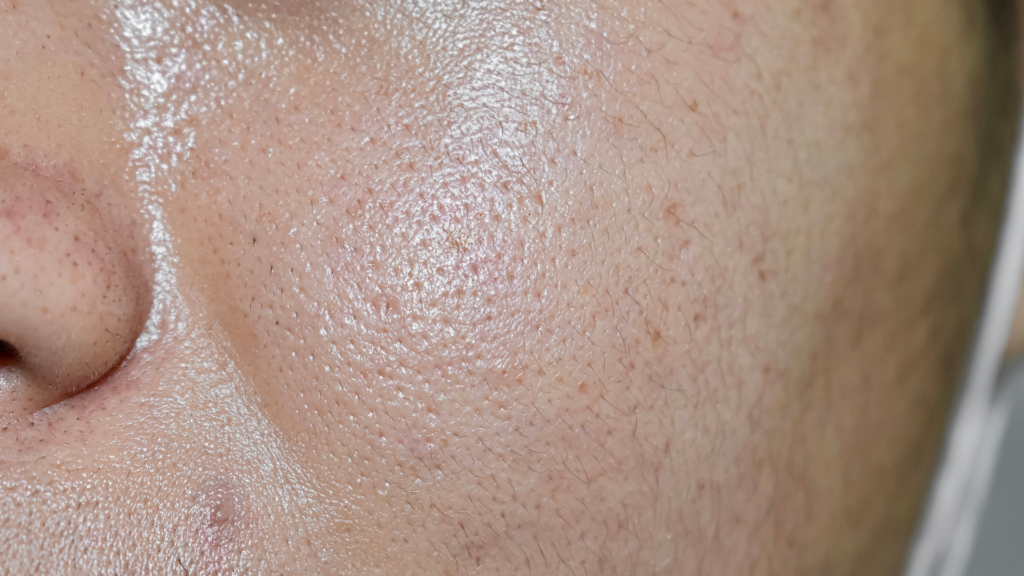
Your skin isn’t dirty. It’s compensating.
You wash your face. It feels clean. Six hours later it’s oily. You wash again. The next day it’s oily faster. You wash more often. And now we’re off.
It’s called sebum rebound. And it’s the most common skin mechanism nobody talks about.
First… what sebum is — and isn’t. Sebum isn’t dirt. It’s your skin’s self-produced protective film. The sebaceous glands produce it to keep the skin supple, water-resistant, and protected against bacteria and the environment.
The problem starts when you remove all of it.
Think about the cycle. You wash with a strong cleanser — SLS-based face wash, scrub, micellar water with surfactants. The cleanser removes all the sebum from the surface. The skin registers… “the barrier is broken, we’re unprotected.” The sebaceous glands ramp up. They produce more sebum than normal to compensate. Your skin feels oily. You wash again. And the glands ramp up even more.
It’s a feedback loop. And it escalates.
It’s the same as the hair. If you read the hair series, you know the mechanism. SLS shampoo strips the scalp’s sebum, the scalp overproduces, you wash more often, it overproduces more.
The skin does exactly the same thing. Because it’s the same biology. Sebaceous glands. Sebum. Feedback loop. And just like with the hair… the solution isn’t to wash more. It’s to wash less. And milder.
“Oily skin” is rarely a fixed state. Dermatologists distinguish between “oily skin type” and “reactive oiliness.” The first is genetic — you produce more sebum than average. It’s rarer than the industry would have you believe.
The second is reactive. Your skin overproduces because it’s been over-washed, over-exfoliated, or over-treated. Take the cleanser away, and the production normalizes over weeks.
But that requires you to stop doing what’s causing the problem. And it requires you to hold out while the skin looks oily during the transition.
Then there’s the invisible problem — transepidermal water loss. When the barrier is stripped, your skin loses moisture. Normally the skin loses 300 to 400 milliliters of water a day. A damaged barrier? Up to 75 times the normal level.
Your skin isn’t oily and dry. It’s dry because it’s stripped, and oily because it’s compensating. They’re two symptoms of the same problem.
Moisturizer covers it. It replaces the lipids your cleanser removed. But it doesn’t fix the cause. The next wash strips again. And the cycle runs.
What can you do? Wash your face with water in the morning. Just water. Your skin hasn’t sweated through the night — it has produced sebum. That’s the point.
Use soap in one place… where it’s needed. Armpits, groin, feet. Not the whole body, not twice a day.
And give it time. Two to four weeks, just like the hair. The sebaceous glands need to down-regulate. They do — if you let them.