
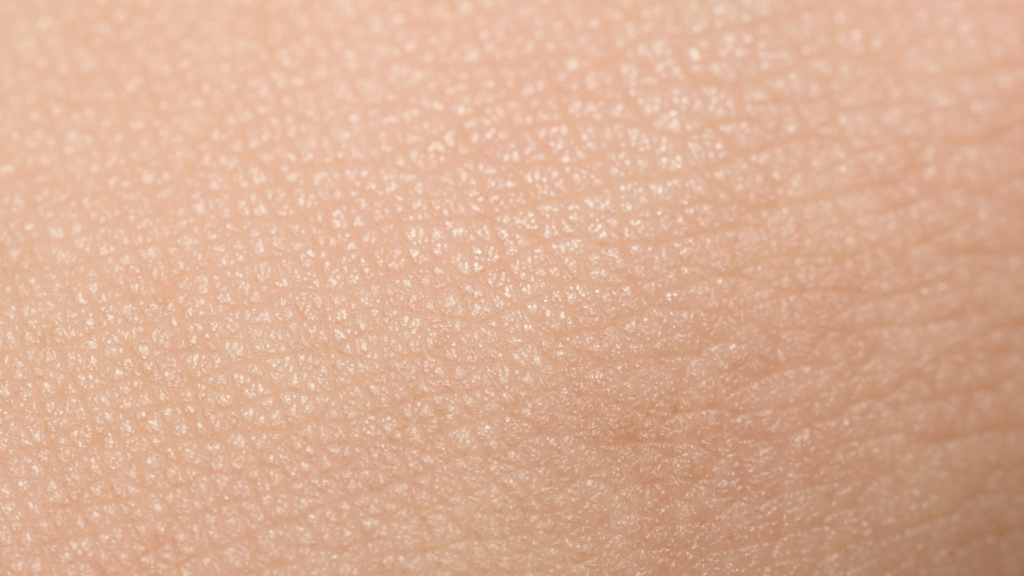
Your skin is acidic. That’s not a problem — it’s the whole point. The invisible layer that protects you is called the acid mantle.
The surface of your skin has a pH between 4.1 and 5.8. The average sits around 4.7 to 5.0. The thin, invisible layer of sebum, sweat, and fatty acids that covers the skin is called the acid mantle. And it’s your immune system’s first watchdog.
Your skin is covered in bacteria. Billions of them. That’s not gross — it’s design.
Staphylococcus epidermidis is the good one. It thrives in an acidic environment — pH below 5.5. It produces antimicrobial peptides that keep pathogenic bacteria down. It’s part of the skin barrier.
Staphylococcus aureus is the dangerous one. Inflammation. Infections. Boils. It does better in a neutral to alkaline environment — pH above 6.
The acid mantle favors the good one and holds back the dangerous one. It’s simple biology… set the right environment, and the right organisms dominate.
So what does alkaline washing do to the acid mantle? Traditional soap — including my own — has a pH of 9 to 10. That’s alkaline. When the soap meets your skin, it raises the skin’s pH by up to 3 units. Skin that sat at 4.7 is suddenly at 7.5.
That lasts up to 90 minutes.
For those 90 minutes, Staphylococcus aureus has better conditions. The acid mantle is temporarily disrupted. The skin barrier’s lipids are partly dissolved. And the skin spends time and energy rebalancing.
One wash a day? The skin handles it. Two or three washes? The pH never gets back down. The acid mantle is chronically disrupted.
And SLS makes it worse. Sodium lauryl sulfate — the most common surfactant in industrial soap, shampoo, toothpaste, and cleaning products — does more than raise pH.
SLS strips lipids from the stratum corneum, the outermost skin layer. The lipids — ceramides, cholesterol, and free fatty acids — are the mortar that holds the skin cells together and moisture in. Without them, the barrier opens. Moisture escapes. Irritants get in.
SLS also reduces the expression of profilaggrin — the precursor to filaggrin, the protein that’s crucial to the skin barrier’s integrity. Less filaggrin means a weaker barrier. And it happens after just six hours of exposure.
RenHverdag soap contains no SLS. It’s cold-processed — oils saponified with lye. The glycerin is still in the soap. In enormous amounts. No synthetic surfactants, no lipid-stripping.
It’s still alkaline. pH 9 to 10. Cold-processing doesn’t change that. But it doesn’t strip the barrier beyond the pH effect. And it washes off — it doesn’t sit in your clothes, in your bedding, in everything your skin touches all day, the way SLS in laundry detergent does.
So what can you do? Wash less often. Not because you’re lazy — but because your skin needs time to rebuild the acid mantle between washes.
Wash with milder things. Soap cleans. SLS strips. There’s a difference.
And drop the antibacterial soap. It kills Staphylococcus epidermidis along with everything else. The good bacteria aren’t collateral damage — they’re the whole defense.
Sources
- Journal of Integrative Dermatology, “From Discovery to Modern Understanding: The Acid Mantle in Dermatology”
- Indian Journal of Dermatology, “Acid Mantle: What We Need to Know” — pH-recovery op til 90 min
- PMC, “Association Between Skin Acid Mantle, Natural Moisturizing Factors, and Antibacterial Activity Against S. aureus”
- Pubmed, “Skin Barrier Disruption by SLS Alters Profilaggrin Expression” (2008)
- PMC, “Role of pH Value in Clinically Relevant Diagnosis” — pH-værdier og bakteriel balance