
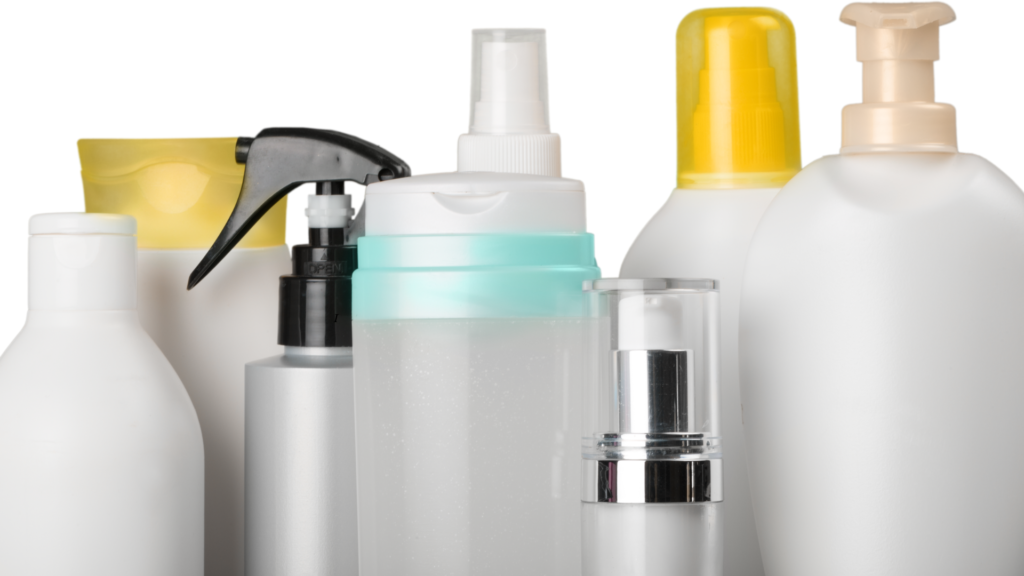
You’d like to know whether there’s problematic chemistry in your soap.
At least that’s what you say.
In September 2023, the Danish Consumer Council launched the campaign “Back first.” The message was simple: turn the product over. Read what it says. One in three cosmetic and personal care products contains problematic chemistry… substances that are harmful to health or the environment. That’s what their own review through the Chemical Magnifier app showed.
The campaign reached 1.7 million Danes. App downloads quadrupled in one week. People started turning the bottle over.
In April 2025… a year and a half after the campaign… Gjensidige and YouGov ran a survey.
Four out of ten Danes never check the ingredient list on their care products. Never.
1.7 million reached. Four times as many downloads. And still nearly half don’t check.
In January 2026, Opinion ran a survey for the Nordic Swan Ecolabel. One thousand and ten Danes were asked.
Eight out of ten find it hard to tell whether their products contain harmful chemicals.
Every fourth person doesn’t trust that the authorities have removed the dangerous substances.
So here’s the movement: First people don’t check. Then some begin to check. And what they find on the back is written in a language they don’t understand.
The problem isn’t solved. It’s changed shape. From apathy to confusion.
I ran my own survey in the spring of 2026. It’s not big. It’s not representative. But it confirms the same pattern.
Forty-four percent said ingredients are the most important thing when choosing care products. More important than price. More important than brand. More important than fragrance.
But only twenty percent fully agreed that they actually know what’s in the products they use.
Nearly half say ingredients are the most important thing. Only one in five knows what’s in their products.
And seventy-six percent couldn’t name a single Danish brand that makes handmade soap. Not one.
Thirty-seven percent shop in the supermarket… Netto, Føtex, Rema 1000. Of those who said ingredients are the most important thing, thirty-eight percent still shop in the supermarket.
They buy what they can find. Not what they’d actually like to have.
And what they find in the supermarket… full of problematic chemistry… is designed to feel right. “Fragrance-free” on the front. Sodium Laureth Sulfate, Cocamidopropyl Betaine, and Methylisothiazolinone on the back.
Sixty-six percent said they’re interested in care products with few and simple ingredients. But seventy-six percent can’t name a single brand that delivers it.
The vacuum between your desire to know and your action doesn’t get filled by you. It gets filled by the next campaign that gives you a feeling of having chosen right.
The problem isn’t that people don’t care. Three surveys over three years say the opposite. People want to.
The problem is that the gap between “I’d like to know” and “I can actually see through it” doesn’t get closed by the consumer. It gets closed by the industry.
And the industry has no interest in closing it honestly. It has an interest in making you believe it’s already closed.
“Fragrance-free.” Closed. “With natural ingredients.” Closed. “Dermatologically tested.” Closed.
None of it means what you think. “Dermatologically tested” means a dermatologist supervised a test. Not which test. Not how many people. Not whether the result was good. “Fragrance-free” has a legal definition… but “parfum” on the ingredient list can also mean a masking agent, added to hide a chemical smell, not to provide fragrance. The difference is invisible to the consumer. “Natural ingredients” has no legal definition at all.
You feel like you’ve chosen right. You’ve just chosen what was written on the front.
The Consumer Council said it in 2023. We’ve said it from the start. Your great-grandmother probably said it too… just in other words.
But it’s not enough to turn it over. You also have to understand what you’re reading. Otherwise you’re just swapping one kind of ignorance for another.
Turn the product over. Read the back. And if you can’t pronounce half the words… then ask yourself why you have to be a chemist to choose a bar of soap.
It’s not an attack. It’s an invitation.
Sources:
- Forbrugerrådet Tænk Kemi, 12. september 2023: “Hvert tredje kosmetik- og plejeprodukt indeholder problematisk kemi”
- Forbrugerrådet Tænk Kemi, årsberetning 2023: Kampagnetal for “Bagsiden først”
- Gjensidige/YouGov, 23. april 2025: “4 ud af 10 danskere tjekker ikke ingredienslisten”
- Opinion for Svanemærket, januar 2026, 1.010 respondenter: “8 ud af 10 har svært ved at gennemskue skadelig kemi”
- RenHverdag markedsundersøgelse, forår 2026