
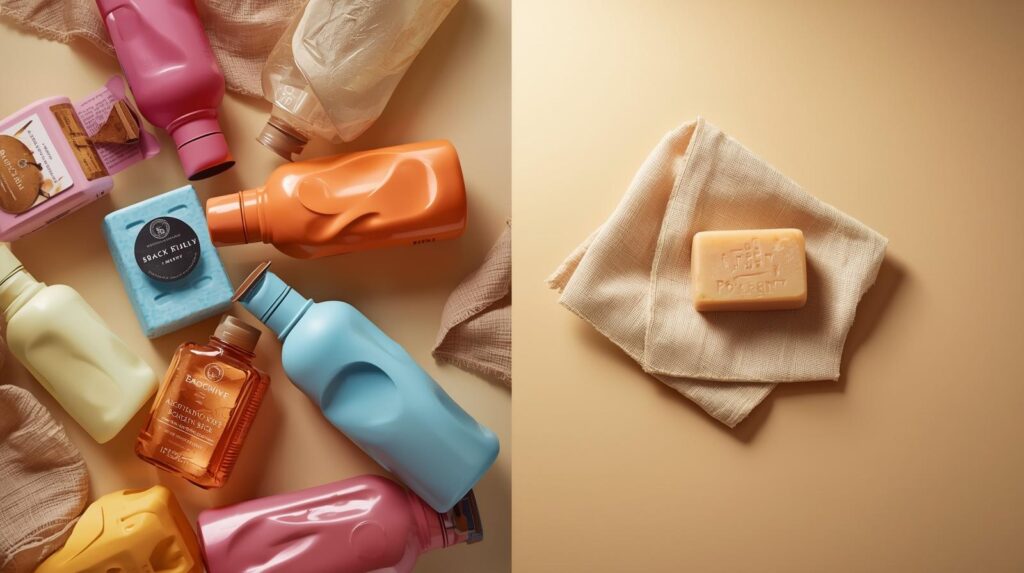
Today, one soap for everything almost sounds revolutionary. Or just strange.
I’ve thought it myself… “oh, how clever it would be if you could just…” I thought I’d practically invented the wheel.
I hadn’t.
Still, over time I’ve talked to a great many people who see soap as something you only wash your body with. Others see it as just pampering and wellness.
But soap has always been universal.
The olive oil soaps from Marseille and Castile in the thirteen hundreds — body, hair, laundry, floors, dishes.
Brown soap in the eighteen hundreds, Danish — the same.
It’s not because our ancestors weren’t sophisticated. It’s because soap does one thing… it breaks fat and dirt apart so they can be rinsed away.
Fat is fat — whether it’s on a plate, a shirt, an arm or a scalp.
What changed? Marketing.
Shampoo was invented around 1900. Marketed separately in the thirties. Conditioner came in the fifties. Body wash in the seventies — as a “modern alternative to the old-fashioned soap bar.”
The face-wash category was built up through the eighties and nineties with the “your skin is different from your body” message.
Intimate soap — a category that didn’t exist before the nineties.
Each “new category” wasn’t a scientific discovery. It was a business strategy. Sell six bottles where one used to be sold.
Our soap washes hands, face, body, hair and dishes. But it doesn’t stop there.
Soap flakes in warm water clean wooden floors. That’s not a hack. It’s centuries of Scandinavian tradition. The soap fills the pores and creates a water-repellent surface.
Wool and silk? The olive oil soaps have been used for both in France since the Middle Ages. Rinse with vinegar water afterward to neutralize the pH. That’s all there is to it.
Shaving. Shaving soap has existed since the thirteen hundreds. A soap and a brush beat canned foam. Ask anyone who has tried both.
Leather. Saddle soap — the classic leather soap — is real soap mixed with beeswax and oil. Used on horse tack and boots for centuries. Plain soap cleans leather. The oil afterward conditions it.
Jewelry. Mild soap and water is what the jeweler recommends for gold, silver and diamonds. Not a special product. Soap.
Paintbrushes. Makeup brushes. Kitchen utensils. Anything with fat or pigment in it.
Hair, though, needs a pH adjustment afterward — in the old days you used vinegar, ideally apple cider vinegar, soured milk or lemon juice. You can mix something in your own kitchen. Otherwise, we’ve made a leave-in that contains only the absolute essentials.